

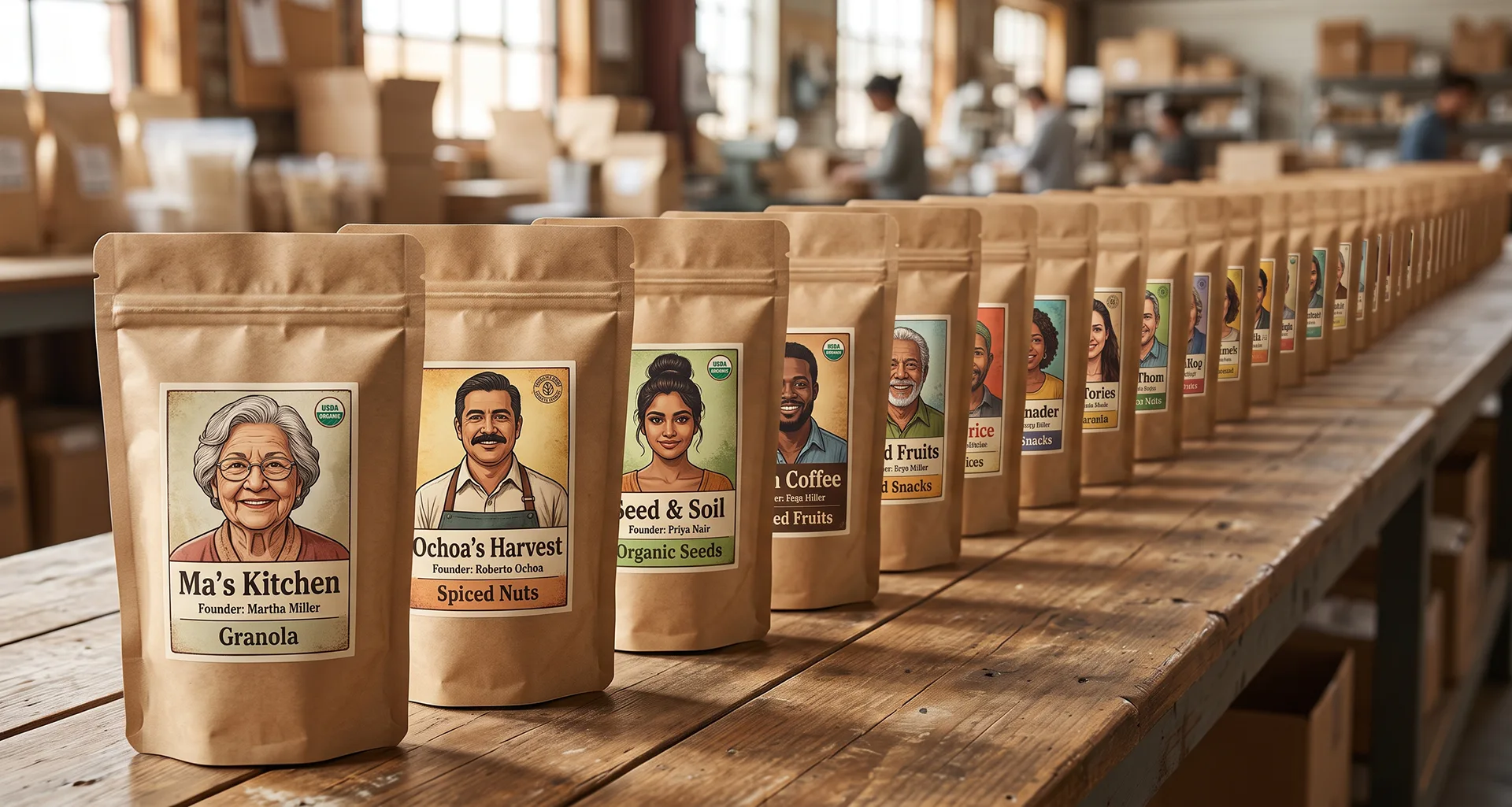
Read the “Our Story” page on a dozen emerging food brands, and you’ll start to notice a pattern. A founder makes something great in their kitchen. Friends and family can’t get enough of it. Someone says, “You should sell this!” And here we are.
It’s a lovely story. It’s also, at this point, just about everybody’s story.
For most small food and beverage brands, building the brand around the founder’s personal story, name, or face is a mistake. Unless you already have real star power or credentials that set your product apart, shoppers who don’t know you won’t find much value in your story, it blends in with every other founder story on the shelf, and it can make your business harder to sell down the road. You’re better off building the brand around a distinct name, theme, and story your customer can see themselves in, with the founder playing a supporting role.
Does Anyone Care About Your Founder Story?
Honestly? Mostly, no. And that’s not a knock on you.
Unless you’re Martha Stewart, Wolfgang Puck, or someone with the notoriety, star power, or expertise to lend real, differentiating credibility (a well-known doctor, nutritionist, athlete, or chef), tying the brand to you just doesn’t carry much value for the person standing in the aisle. They don’t know you. They’re deciding in a few seconds whether your product is right for them.
When the name is already famous, it’s a real asset. In 2008, Martha Stewart’s company paid a reported $50 million for Emeril Lagasse’s TV, cookbook, and licensed product business. That’s what a name with star power is worth. For the rest of us, the name on the label is just a name.
You’re in this to sell product and build a business. It’s important to put yourself in the best possible position to do that.
Even expertise and a bit of fame don’t travel as far as you’d think. A notable local chef might sell plenty of product to restaurant regulars who know and love them. Expand regionally, beyond that local sphere, and you’re just another random chef with a jar of sauce.
How Did Every Small Brand End Up with the Same Story?
A little history helps here. For a long time, grocery shelves were dominated by big national brands and private label store brands. Think mascots, polished ad campaigns, and a fairly faceless corporate vibe.
Then the internet and social media made it possible for small brands to get into the market and reach consumers directly. Many of them stood out by telling authentic, personal stories. That scrappy, human approach was a real contrast to the big polished brands, and it worked.
So everybody did it. Over the last 20-plus years, the founder story went from differentiator to default. Now so many brands tell some version of “I made a cool product, shared it with friends, they encouraged me to start a business, and here we are” that it’s become wallpaper. Katie Klencheski, founder of the agency SMAKK, put it well in Inc.: “a founding story cliché can become a foundational barrier to brand growth.”
The thing that once set small brands apart is now the thing that makes them look alike.
What Should Your Brand Be Built Around Instead?
In our experience, you’re better off with a unique name that has storytelling potential, a distinct theme, and a way for your customer to see themselves in the brand.
That last part is what founder-centered brands usually overlook. When the brand is about you, your customer is just the audience for someone else’s story. When it’s built around an idea they connect with (an attitude, a ritual, a value, a sense of humor), they get to step into it. It’s the same idea at the heart of Donald Miller’s StoryBrand framework: the customer is the hero, and the brand is the guide.
Great storytelling is foundational to effective branding, and it’s where our process starts. A strong brand name and story inform the identity, which informs the packaging, the photography, and the website. Your personal story might inspire some of that. It just shouldn’t be that.
Should You Put Your Name or Face on Your Brand?
Some founders take it a step further and put their own name or likeness on the brand. Unless you’re someone who already has a huge following and brand awareness, this rarely adds value. It also makes it harder for customers to see themselves in the story, because the story is so clearly yours.
And it can get messy if you ever want to sell the business. When your name and face are the brand, they become part of what a buyer is paying for, and disconnecting your personal identity from the business isn’t simple. The food world has its own cautionary tales:
- Wally Amos made Famous Amos a household name, then lost ownership of the company, and with it the right to use his own name. His next venture was called, fittingly, Uncle Noname Cookie Co.
- Kathleen King lost her first business, Kathleen’s Bake Shop, after a bad business deal in 1999. A settlement gave her the building back, but not the name. She started over as Tate’s Bake Shop, named after her father.
A sale isn’t the only thing that can force the split. Papa John’s founder John Schnatter was pictured on the chain’s pizza boxes when, in 2018, controversy over his comments led the company to pull his image from its marketing. His name stayed on the door.
Fashion has even more famous fights. Kate Spade legally changed her name to launch a new label after selling her company, and Karen Millen lost a court battle over using her own name on a new line.
The same logic applies to a hot sauce or a granola with your name on the label. A June 2026 deal guide from the law firm Skadden notes that buyers of founder-led brands “must confirm that the target holds sufficient persona rights,” and that “existing agreements between the company and founder are typically insufficient.” Translation: more legal work, more negotiation, and often more of your sale price tied to how long you stick around.
Even if selling isn’t on your radar today, it’s smart to build a business that could be sold.
When Does the Founder Story Belong?
None of this means personal stories don’t have their place. They can be inspiring. If you’re speaking to an audience of other business owners, appearing as a guest on a food podcast, or sharing your experience to help other brands, those are exactly the right venues for that kind of storytelling.
And when it does make sense for the founder to be involved publicly, I typically recommend doing it in support of the brand, not as the brand. A little founder presence can lend authenticity, which can be really valuable in certain situations.
For instance, we worked with a coffee company that built its brand around a theme of supporting dog rescues. The brand got traction and found some success, but it was online-only and drop-shipped, so customers never encountered it anywhere but a screen. Weaving in a little authenticity with the founder and some of the rescue organizations we worked with helped make the brand feel more real. Even then, the brand stood on its own, and the founder messaging was supportive and secondary.
Are There Exceptions?
Of course. Like most things in life, this philosophy isn’t universally true. There are times when tying your personal brand and story to your business brand makes sense.
You just need to be really careful when planning your business that you know what you’re getting into. For a CPG food brand, it’s just not often a benefit.
What to Do Next
If you’re building a brand, or wondering whether yours leans too hard on you, here’s where I’d start:
- Read your “Our Story” page with fresh eyes. Could it belong to 10 other brands with a few details swapped out? If so, it’s wallpaper.
- Ask whether a stranger would care. Does your story give a shopper who’s never met you a reason to buy?
- Find the idea your customer can step into. What attitude, ritual, or value could your brand stand for that they’d want to be part of?
- Keep your name and face off the label unless they already sell product on their own.
- Put your personal story where it fits: podcasts, panels, and conversations with other founders.
- Plan for an exit, even if you never take it. A brand that stands on its own is worth more to you, and to a buyer.
If you’re still pre-launch, here’s also why branding is critical to your food brand’s MVP launch.
Frequently Asked Questions
Should I name my food brand after myself?
Usually not. Unless your name already carries recognition or credibility with shoppers, it won’t do much to sell product, and it can complicate things if you ever sell the business. A distinct name with storytelling potential gives you more to work with.
Is it bad to have an “Our Story” page?
Not at all. Just let it support the brand rather than carry it. Keep the focus on what the brand stands for and why it matters to the customer, with the founder as a supporting character.
What if my brand is already built around me?
It’s not the end of the world. A thoughtful brand refresh can shift the spotlight to the brand itself while keeping the authenticity that got you this far.
Most Founders Don’t Do This on Purpose
Here’s the thing: most founders who build the brand around themselves don’t do it intentionally. They’re great at making food, not at branding and marketing, so they do what seems to make sense. And everybody else seems to be doing it, too.
That’s exactly why you bring in a partner. We’ll make sure you’re doing the right thing for your brand and your business.
Starting a new brand, or rethinking one that’s built around you? See how we help startup food brands with naming and storytelling, and let’s chat.


Leave a Reply