

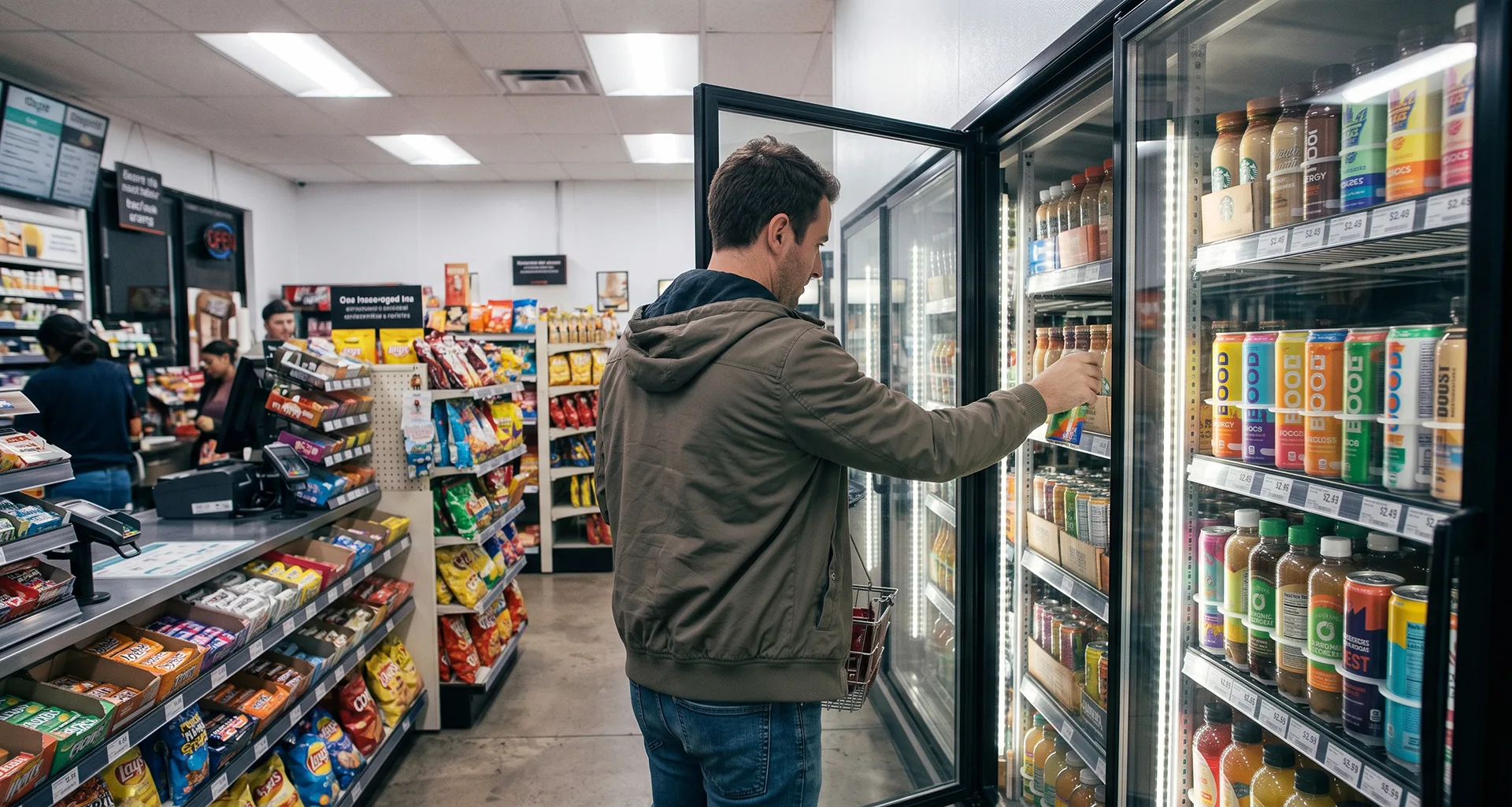
If you followed this year’s NACS Show in Las Vegas, you’d think protein had become a legal requirement. C-Store Dive spotted it in nearly every third booth, from soft pretzels to popcorn to gummy candy (C-Store Dive). Simple Mills announced a big c-store push, and Barebells is stretching from protein bars into low-sugar candy.
So, should your brand follow them into the convenience store?
Convenience stores can be a smart next channel for an established food or beverage brand, but they’re rarely the right place to launch. The brands that win there sell shelf-stable, grab-and-go products in single-serve packs that make money at a c-store price and read in about two seconds from arm’s length. If that’s not you yet, the channel will still be there when it is.
Can a New Food Brand Launch in Convenience Stores?
Usually, no. Shelf space in a c-store is tiny, competition for it is intense, and most chains expect real production volume before they’ll commit. That’s a tough ask if you’re still dialing in a co-packer.
The exception is the local independent that likes carrying local brands, which can be a great proving ground. For regional and national chains, the realistic picture is an established brand already selling in a few channels and expanding into a new one. It’s also a tougher room than the buzz suggests. NACS research shared at the show found in-store transactions fell 4.5% in the first half of 2026 (C-Store Dive), and a Jefferies report says c-store food sales are slipping as high fuel prices cut traffic (BevNET). Fewer trips means retailers get pickier about every facing (that’s one product’s front-row spot on the shelf).
Which Products Actually Work in a C-Store?
The product matters more than anything. A frozen entrée or a soup mix is a long shot. Quick snacks, beverages, and everyday essentials were practically built for this channel. Shelf stability matters too, since cooler space is limited and a c-store may not turn your product as fast as a grocery store.
My gut says health and wellness, including functional products, is where the opportunity is growing. I’m seeing more of these items on c-store shelves, and I expect that to continue. Plenty of shoppers want a lower-carb drink instead of the high-sugar, high-calorie options that have always owned the cooler. Electrolyte and hydration packs you can dump into a bottle of water are a natural fit. So is clean energy.
The numbers agree: NACS reports alternative snacks grew 7.9% in 2025 (NACS). Some brands design around the c-store moment instead of just shrinking an existing pack. Pickle Juice sells a 2.5-ounce functional shot for muscle cramps, and Barebells, Fairlife, and MetRx are pushing high-protein drinks into the channel (NACS Daily). Those formats are built for someone standing at a cooler door, not someone planning a week of meals.
How Does Single-Serve Change Your Unit Economics?
Most c-store sales are single-serve, which may not match the format you sell everywhere else. Going from a family-size bag to a one-serving pack changes your packaging cost per unit, your case pack, your freight, and the price a shopper will pay at the counter. Run those numbers before you pitch, not after a buyer says yes.
There’s a smart way to design for this. Make your single-serve pack fully retail-ready, with its own UPC barcode, Nutrition Facts panel, and every required regulatory element. Then put those singles into a multi-unit case pack that can also sell online, direct to consumers. The store can sell singles at the register or multi-packs on the shelf, however it wants to merchandise you.
How Do You Stand Out on a C-Store Shelf?
In a grocery aisle, a shopper might browse. In a c-store, they’re grabbing something on the way back to the pump. Your pack gets about two seconds to say who you are and what’s inside, usually at arm’s length and right next to household names.
For this channel, lead with one clear benefit (20 grams of protein, zero sugar, electrolytes), make the flavor obvious, and keep your brand block consistent so several facings add up to a little billboard.
Then comes the hard part: fitting all of that onto a pack your product was never designed for. An energy shot or a hydration sachet might give you a couple of square inches. That space still has to carry your brand, product name, flavor, the claim that sells it, net quantity, a Nutrition Facts panel (or Supplement Facts, for some functional products), ingredients, allergens, a barcode, and your company info, all sized and placed to meet FDA rules.
Shrinking your existing label won’t solve it. Someone has to decide which claim earns the front of the pack, what moves to the back or side, how the information hierarchy holds up when the type gets small, and where the regulations leave room to be creative and where they don’t. Get it wrong and you either bury the reason someone would buy you or end up reprinting packs that don’t pass compliance. That’s why good design and good packaging design are different disciplines.
What Should You Do Before Pitching a C-Store Buyer?
- Check your capacity. Can you supply a chain? If not, start with local independents.
- Pick the right SKUs. Choose one or two that are shelf-stable and grab-and-go.
- Do the single-serve math first. Include packaging, freight, and retailer margin.
- Design the single as a complete retail unit. Plan the claims, hierarchy, and FDA-required information for the small pack, and make sure it works alone, in a multi-pack, and in a DTC case.
- Test it at arm’s length. Can a stranger name the brand, product, and benefit in two seconds?
If you’re weighing the move, we’d love to help you work through the format, the pack, and the rollout before you spend a dime on printing plates. See how we help emerging brands scale into new channels, how we approach health and wellness brands, or browse our branding and packaging services. Then let’s talk about your c-store plan.


Leave a Reply